
Starting a business is exciting, but it can also be overwhelming—especially if you’re not based in the United States. You might want to access the U.S. market, raise money from investors, or accept payments through Stripe. But the paperwork, tax rules, and legal requirements can make the whole process feel like a maze.
That’s exactly where Stripe Atlas comes in. Created by Stripe—the well-known payments company—Atlas is designed to help founders all over the world launch a fully legal U.S. business from anywhere, completely online. In just a few days, you can have a Delaware C‑Corporation or LLC, a U.S. tax ID (called an EIN), a business bank account, and a Stripe account ready to accept payments.
You don’t need to fly to the U.S., deal with complicated government forms, or hire a high-priced lawyer to get started. Stripe Atlas takes care of most of it for you. It also throws in extras like $5,000 in AWS credits, access to legal document templates, and an online community of fellow entrepreneurs.
Sounds like a dream, right?
But like anything that promises simplicity, there are important details to know. While Stripe Atlas can be incredibly useful for the right kind of startup, it’s not the perfect fit for every business. There are ongoing tax and legal responsibilities, and it may be more expensive or complex than other options depending on your goals.
In this detailed review, we’ll break down exactly what Stripe Atlas is, how it works, what you get for your money, and—most importantly—who it’s right for (and who should probably look elsewhere). We’ll also explore real pros and cons, share user feedback, and compare it to other business formation tools.
By the end, you’ll know whether Stripe Atlas is the right launchpad for your business dreams—or whether there’s a better path for your needs.
Let’s dive in.
1.What Is Stripe Atlas?
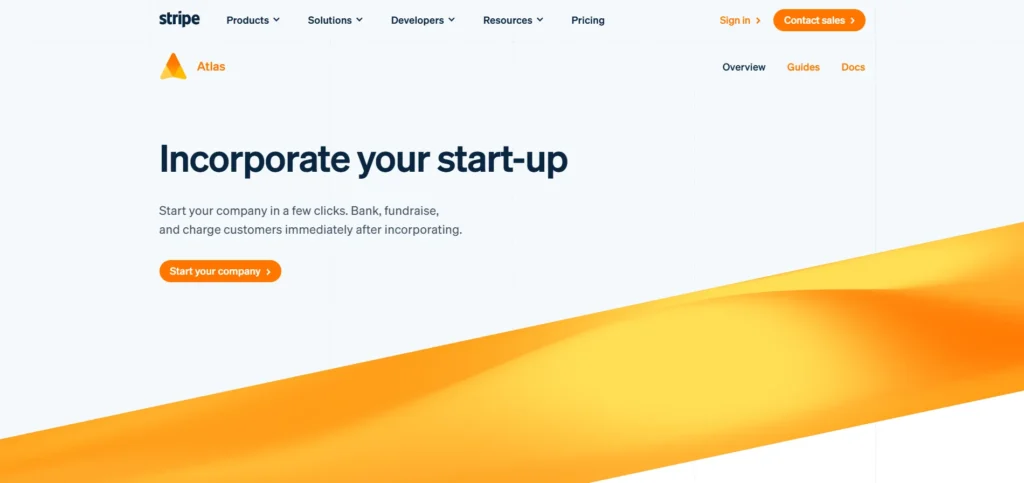
Stripe Atlas is a product by Stripe, the payments company. It helps you launch a U.S. company entirely online. For a one-time fee of five hundred US dollars, Stripe Atlas handles everything:
- Forming a company in Delaware. This can be either a corporation, called a C‑Corporation, or a limited liability company (LLC).
- Getting you a United States employer identification number, known as an EIN. You need that to open a bank account, hire people, or pay U.S. taxes.
- Helping you open a U.S. bank account and create a Stripe account to accept payments.
- Providing legal templates like bylaws, stock agreements, and officer resolutions.
- Offering tools to manage your company’s ownership, known as the cap table.
- Giving you access to around five thousand dollars in credits from Amazon Web Services, which helps if your startup needs cloud infrastructure.
- Giving you access to a community of other founders, support from Stripe, and special discounts.
In short, Stripe Atlas wraps up a bunch of U.S. startup essentials into one clean package with one set price.
2. Why Is It Useful?
2.1 Speed
If you start from scratch, building a U.S. company abroad takes weeks or months. You need to pick a state, register your company, file paperwork, wait for approval, apply for an EIN, set up a bank account, and integrate payment tools. With Stripe Atlas, Stripe handles most steps. Reviews suggest it takes just a few days to get everything done. That is a big advantage.
2.2 Remote Access
You do not need to travel to the U.S., meet lawyers in person, or rely on physical mail. Everything is digital. This is especially helpful for people in countries without easy links to U.S. financial systems.
2.3 U.S. Credibility
Delaware C‑Corporations are seen as standard for serious tech startups. They are familiar to investors, prepared for venture capital, and hold predictable corporate and investor structures. Being able to present a Delaware cap table can boost credibility with global investors.
2.4 Built for Stripe
If your plan is to take credit cards, subscriptions, or payments online, you probably want Stripe. With Atlas, your Stripe connected account, banking, and company registration are all bundled. That avoids friction and saves time.
2.5 Extra Perks
Those Amazon Web Services credits are real money for hosting and infrastructure. Legal templates and community perks help reduce cost and stress early on. You do not pay separately for a lawyer to draft your bylaws.
3. What You Get – Detailed Breakdown
Let’s look at what Stripe Atlas packages for the five hundred‑dollar fee:
3.1 Delaware Company Formation
You choose between forming a C‑Corp or an LLC in Delaware. C‑Corps are the common structure for venture‑backed startups. LLCs suit small teams or service businesses. Stripe files the articles of incorporation or organization with the Delaware Secretary of State.
3.2 Employer Identification Number (EIN)
This is like your company’s tax ID. You need it to hire, open a bank account, and file taxes. Stripe applies for it on your behalf, which is helpful because non‑U.S. founders normally have to mail forms or travel.
3.3 U.S. Bank Account
A U.S. business bank account is crucial for doing business. Stripe partners with U.S. banks to offer this remotely. They have done weeks of work to make the process smooth.
3.4 Stripe Account
Your Stripe account is automatically set up for the new company. That means you can start accepting cards and payments from day one.
3.5 Cap Table & Stock Structure
Startup equity can be confusing. Stripe Atlas gives you a simple cap‑table tool that shows who owns what shares. You can formally issue shares, set up stock classes, and grant options if needed.
3.6 Legal Templates
You receive core legal documents like standard bylaws, board resolutions, intellectual property assignment forms, and a vesting equity plan. These are ready-to-use and customizable.
3.7 AWS Credits and Discounts
Qualifying startups usually get around five thousand dollars in AWS credits, plus other credits from partners. This helps with startup expenses.
3.8 Community & Support
Joining Stripe Atlas gives access to a community of other startups. Plus, there is support from Stripe staff and access to events, mentorships, and peer Q&A.
All of this for a single payment of five hundred dollars. Not bad at all.
4. Pros – What Makes Stripe Atlas Strong
4.1 One‑Stop Convenience
No juggling multiple providers. Formation, EIN, bank account, payment integration, legal docs, cap table, community—all in one place.
4.2 Built on Stripe’s Platform
The same people who made Stripe payments made Atlas. So it integrates well with the payment platform and developer tools you need.
4.3 Fast & Remote
No waiting weeks. No flying to the U.S. No physical paperwork. Do it all online, and you can be live in days.
4.4 Investor-Friendly Structure
Delaware C‑Corporations are the standard for venture capital. That means you’re ready if, down the road, you approach VCs or accelerators.
4.5 Helpful Extras
Five thousand dollars in AWS credits can pay for many months of hosting. Legal templates and community access reduce common early-stage costs.
4.6 Trust and Brand
Stripe is a well-known and trusted brand in payments. So users feel confident that the service works and is legit.
5. Cons – What Stripe Atlas Doesn’t Include
5.1 Locked into Delaware
If you prefer to incorporate in California, your home country, or another U.S. state, you can’t. You must use Delaware. This could add complexity or ongoing fees in another state.
5.2 U.S. Corporate Tax
If you form a Delaware C‑Corp, you face a minimum 21 percent corporate tax. You have to file U.S. tax forms annually, plus possible state taxes.
Even if you do not make profit here, shareholder liability could require personal reporting and tax filings.
5.3 Ongoing Compliance
You need to pay Delaware franchise tax, keep a registered agent, file annual reports, and maintain financial records. That means time or hiring help.
5.4 Limited Support
Stripe gives basic guidance, but no full bookkeeping, tax filing, or personal legal counsel. For deeper questions, you’ll still need a professional.
5.5 Not for All Businesses
Stripe prohibits certain business types—such as gambling, adult content, or some financial services. If your business is in a restricted category, Atlas is not an option.
5.6 Bank Account Risk
Even though Stripe tries to secure bank accounts for remote founders, Know Your Customer rules still apply. Some applicants may be rejected without explanation, which is frustrating.
5.7 Cost vs DIY
You pay $500 upfront. Some simple businesses can incorporate themselves for under $200. DIY costs less, though you take on more work and risk.
5.8 U.S. Legal Exposure
As a U.S. business, you’re subject to U.S. laws and courts. This adds liability for non‑U.S. founders, and you may not have protections in your home jurisdiction.
6. What Users Say – Real Feedback
Looking at user reviews helps us understand strengths and weaknesses. I checked independent sources, including reviews on product sites, forums, blogs, and social media.
6.1 Positive Feedback
- Speed & Ease
- Many founders report setting up everything in days, with minimal fuss.
- One founder said they received their EIN the next day and a working Stripe account within two days.
- Remote Use
- Non-U.S. users said it made U.S. company formation possible from abroad without travel.
- Integration
- The tie-in with Stripe payments and the cap table system got praised for its smooth flow.
- Extras Help
- Access to AWS credits, legal docs, and community was appreciated for reducing need to hire consultants.
6.2 Criticisms
- Tax and Compliance Headache
- Founders noted that the complex U.S. tax filings and reporting came as a surprise.
- The Delaware franchise tax and annual report demand was more than expected.
- Customer Support Gaps
- Some users felt support was responsive at signup but less helpful later.
- Legal or tax questions were referred to professionals, rather than solved by Stripe.
- Bank Account Denials
- A few remote founders said their bank applications were rejected without reason, with no workaround offered.
- Not a Complete Magic Bullet
- On forums, people say “Atlas gets you started, but the hard work is after.” The mapper does setup for you but not the follow‑through.
Reading between the lines, reviews show that while Atlas helps build a foundation, real complexities kick in later. You need ongoing compliance help.
7. Cost Breakdown – What You Pay Over Time
Here’s a breakdown of costs to consider beyond the five‑hundred‑dollar signup fee:
One-Time Cost
- Stripe Atlas setup fee: $500
Annual or Recurring Costs
- Registered Agent
- Delaware requires a registered agent. That service costs about $100 per year.
- Franchise Tax
- Delaware charges at least $175 per year in franchise tax, often more for high authorized shares.
- Tax Filing
- Filing IRS Form 1120 or 1120‑F (for foreign-owned C‑Corps) costs time or money. If you hire an accountant, expect $500 to $2,000 per year.
- Legal Help
- For tailored contracts, complex equity, or new share classes, you may pay $500 to $1,000+ as needed.
- Bank & Stripe Fees
- Standard account and payment processing fees apply, just like with any business.
Altogether, annual costs might range from $800 to $3,000+ depending on complexity and help needed.
Comparison with DIY
If you go DIY:
- Incorporation service (e.g., Incfile, ZenBusiness): $100–$300 + filing fee
- Registered agent: $100/year
- Tax and accounting: $500–$2,000/year
DIY can be cheaper, but you trade convenience, integration, and quality of service.
8. Alternatives to Stripe Atlas
While Stripe Atlas is appealing, other choices exist depending on your needs:
8.1 DIY Incorporation Services
Sites like Incfile, ZenBusiness, MyCorporation charge $100–$300. You still pay for bank setup, EIN, legal docs, and manual Stripe setup.
8.2 Other Incorporation Platforms
Products like Firstbase or Clerky offer similar packages, sometimes in multiple states. They may bundle legal support but lack Stripe payment integration.
8.3 Accountant + Lawyer
You can hire a lawyer and accountant. This costs more—perhaps $1,500–$5,000 up front—but gives you fully custom solutions.
8.4 Local or Offshore Entity
To avoid U.S. tax and compliance, you might form a company in your home country or offshore jurisdictions like Singapore or Ireland. This can help tax planning but may limit U.S. customer base or payment options.
8.5 Nomad Capitalist Approach
Some entrepreneurs work with specialists who create tailored entities in multiple countries for tax and legal optimization. This is expensive and complex but sometimes beneficial for high-income founders.
9. Financial and Tax Implications
When using Stripe Atlas, you enter the U.S. tax system. These are some key points to consider:
9.1 U.S. Corporate Tax
C‑Corporations pay a federal rate of 21 percent on profits. There may also be state taxes, depending on where your revenue connects.
9.2 Double Taxation
C‑Corps pay tax at the corporate level, and shareholders pay again on dividends. That is “double taxation.”
9.3 Reporting Requirements
Foreign-owned C‑Corporations file Form 1120‑F, and the IRS might ask for various information. You may also need W‑8BEN forms from shareholders or employees.
9.4 U.S. Franchise Tax
Delaware has a franchise tax based on shares and value. Many small startups pay $300 to $600, but very big share counts could cost thousands.
9.5 Transfer Pricing
If you sell to a related company abroad, you may need to prove that your prices are at fair market value. That means more accounting work.
9.6 Bank Reporting
Banks report U.S. account activity, and your shareholders must report dividends. If you fail to file properly, there could be penalties.
All of this means you should ideally work with a tax professional to make sure you comply.
10. Legal and Compliance
Once incorporated, you must follow certain rules:
- Hold board meetings and record minutes
- Keep financial statements and accounting books
- File annual reports with the state of Delaware
- Maintain a registered agent in Delaware
- Keep track of shareholder ownership
- Use accurate legal documents for stock issuance
- Respect all U.S. federal and state regulations, even when working remotely
These obligations do not go away after incorporation. They continue year after year.
11. Scenario Comparisons: Who Gains Most?
Let’s examine a few founder profiles and see whether Stripe Atlas is a good fit:
11.1 Tech SaaS Startup Outside U.S.
If you build cloud software and plan to sell globally or to U.S. customers, Atlas gives you fast access to payments and Delaware structure. You likely want AWS credits and investor-ready documents, making Atlas a strong choice.
11.2 Freelance Consultant
If you work alone and do consulting gigs, you might not need a Delaware C‑Corp. A local LLC or sole proprietor setup could be cheaper and simpler. Stripe Atlas is probably overkill.
11.3 E-commerce Seller
If you run Shopify or Amazon store, you may not need a U.S. entity—Stripe Atlas could help with U.S. payments, but other payment gateways also work. You’d still face tax and shipping complexities.
11.4 Investment-Backed Startup
If you plan to raise venture capital, investors expect a Delaware C‑Corp. Atlas gives you the structure and cap table you need and gets you Stripe integrated.
11.5 Non-Profit or Community Group
Stripe Atlas is focused on for-profit businesses. It is not structured for non-profits or charities. You’ll need a different path.
12. Long-Term Lifecycle
After your initial setup, your focus will shift to:
- Accounting and taxes: Filing returns, tracking expenses, paying quarterly taxes.
- Compliance: Doing annual reports, paying franchise tax, renewing your registered agent.
- Payroll (if anyone is paid).
- Record updates: Handling new shares, new funding, equity changes.
- Legal filings: If you choose to change structure, relocate, or dissolve.
- Investor readiness: Generating financial statements, growing revenue, attracting interest.
Stripe Atlas gives you the foundation, but the hard work comes after.
13. Summary of Pros and Cons
Pros
- Fast setup and remote incorporation
- Convenient and bundled services
- Stripe payment integration built in
- AWS credits and legal templates
- Investor-friendly Delaware structure
- Trusted and documented journey
Cons
- Locked into Delaware
- Complex U.S. corporate tax environment
- Ongoing compliance, costs, and paperwork
- Limited legal and tax support
- Possible bank denials
- Overkill for low‑revenue, low-growth businesses
14. Verdict – Is Stripe Atlas Worth It?
Stripe Atlas is a powerful startup toolkit. If you are a non‑U.S. tech founder with global ambitions, want U.S. payments, and aim to be investor-ready, it is a fast path to legitimacy. It saves you time, headache, and friction.
On the other hand, if your business is simple, service-based, or low revenue, or if you want full legal or tax support, or prefer a different jurisdiction, then the price and complexity might outweigh the benefits.
In essence, Stripe Atlas is an excellent foundation, but not the whole building. You still need to build that structure with compliance, clarity, and future readiness.
15. Planning Ahead – What Should You Do?
If you’re considering Stripe Atlas:
- Be clear on your goals. Do you need U.S. payments? Are you targeting U.S. customers or investors?
- Budget beyond $500. Plan $1,500–$3,000 per year for taxes, compliance, and registered agent.
- Talk with professionals. Speak with a small-business accountant or attorney before incorporating.
- Check your business category. Make sure your business is allowed under Stripe’s policies.
- Keep records and systems ready. You’ll need transparency and documentation from day one.
Final Thoughts
Stripe Atlas delivers what it promises: a fast, well-integrated, digital way to start a U.S. company. Its strength is in its simplicity and tight integration with Stripe. Its weakness is that it does not replace the need for ongoing tax, accounting, and legal care.
So yes—if your goal is a U.S. startup with Stripe-powered revenue, investor-ready documents, and no need to travel—Stripe Atlas is a smart, effective solution. If your needs are lighter, deeper, or in another jurisdiction, look elsewhere.
FAQ’s
What is Stripe Atlas?
A service that helps you start a U.S. company (C-Corp or LLC) from anywhere.
How much does it cost?
A one-time fee of $500, plus $100/year for registered agent renewal.
What’s included in the fee?
Company formation, EIN, equity documents, legal templates, and support.
How long does setup take?
Usually 3–7 business days.
Can non-U.S. founders use it?
Yes, it’s designed especially for international entrepreneurs.
Does it include a U.S. bank account?
Yes, with partner banks like Mercury.